Ocean rowers Ralph Tuijin and his brother Michael are just over half way across the Atlantic ocean on their way from La Gomera, Spain to Curaco. The expedition is a sort of shake-down leg for Ralph, as his main focus is to cross the Pacific Ocean at its widest point – solo.
The 16,000-kilometer solo Pacific crossing will not make use of any motor or wind-related power. This extreme challenge will take between 7 and 9 months to complete and will be non-stop, without re-supplies or any other support. After leaving from Panama in January 2007 Ralph will set course for the city of Cairns in Australia, where he expects to arrive in mid-September.
The brothers left La Gomera, Spain on September 27, 2006 and almost immediately ran into difficulty. After suffering seemingly endless sea sickness, they were struck by some very large 8 meter seas and their wind generator snapped in half. Ralph and Michael were relying on the wind generator as their main source of power for the impressive satellite communications system they were sporting. The plan was to transmit daily video and photos from the expedition using a state of the art Nera Fleet 55 satellite communications system.
Since early September, the duo has been suffering from unusual calmness. Flat seas and no trade winds make for a slow trip! Due to the wind generator malfunction, I am very disappointed that we are not able to enjoy the video coverage of the expedition that was planned.
Today, Sunday, November 19th marked the start of the “RAMES GUYANE” event – the first transatlantic rowing race competed single-handed, non-stop and without assistance. Sixteen rowers – mostly from France will make their way 2600 nautical miles across the Atlantic ocean from St Louis in Senegal to French Guyana using a standard design 8 meter long, 1.6 meter wide rowing boat specially designed for this race.
The race is expected to take between 40 to 55 days depending upon weather. One of the main difficulties of “Rames Guyane” is the mandatory crossing of the “dol-drums” – an inter-tropical convergence area, where the trade winds give place to sporadic, uncertain and often adverse winds.
Helen and I attended Colin and Julie’s presentation and documentary premier “Beyond the Horizon” last night in Canmore. What an inspirational event! Wow – it’s absolutely incredible what Colin and Julie have achieved.
Colin Angus – the worlds first man to circumnavigate the globe by human power and his wife to-be and Julie Wafaei
On May 20th 2006, after 720 days, Colin Angus and Julie Wafaei completed Expedition Canada – the first human powered circumnavigation of our planet. In my opinion, the human powered circumnavigation of the earth is one of the last great firsts. Colin travelled 43,000 km by rowboat, bicycle, canoe, ski, and foot – a journey that voyaged across 3 continents, 2 oceans and 17 countries. Julie travelled with him for most of the expedition, including rowing 10,000 km unsupported across the Atlantic Ocean, making her the first woman to row across the Atlantic from mainland to mainland and the first Canadian woman to row across any ocean (from mainland to mainland).
The team used zero-emissions travel to highlight issues with global warming and to inspire others to use non-motorized transportation.
Canadians Colin and Julie are currently travelling across Canada in speaking tour and film premiere. Colin’s book, Beyond the Horizon, will be released in March 2007 (for those of you that can’t wait he has two other books on previous adventures). An adventurer’s resource centre divulging hard-to-find information (cold weather travel, ocean rowing, etc.) and on-line store offering expedition films and books will soon be available on this website:
The film was great! I HIGHLY recommend buying it when it becomes available through their web site. I can hardly wait to read his book.
I just love the way Colin operates – he just sucks it up and does what needs to be done. He makes me proud to be a Canadian. I think we all suffer too much from what I call ‘analysis paralysis’ – where you analyze something to death and then never get around to doing it because you have lost some self confidence, or have lost interest, or feel the need to study the issue ad infinitum. I think Colin does the necessary home work, makes minimum necessary plans, then just gets to work. He intuitively understands that there is more learning from doing than there is from studying.
Bravo Colin and Julie! – In this day and age of excessiveness where we strive to do more with more, your doing more with less approach to life is refreshing and inspirational. I hope the world wakes up and gives you the recognition you both deserve!
On a whim, I blindly sent out some emails a few weeks ago to sort of test the waters with regard to how eager companies would be to sponsor the Atlantic expedition project by donating their products. I sent an introduction email with the above .jpg image attached. I have a macro set up in PhotoShop that mostly automates the insertion of the potential sponsors name and product image, then spits out a .jpg file like the one above.
I was a pretty good marketer in my former entrepreneurial life, and I know how important it is help your target audience imagine the benefits of what you are proposing. At Image Club (sold to Adobe, sold to Eyewire, sold to Getty Images, and now Veer), in our catalog, we always featured many great examples of what our publishing content software could do for a creative campaign. In my opinion, that ‘creative inspiration’ that we provided was largely responsible for the success of the catalog, and my company.
I have had some pretty good success with the blind email approach, and I really think I can get most of my equipment and supplies donated by companies who want to be involved with this project.
This is what I am offering sponsors in return:
1. Their company logo on the boat 2. A series of high res photographs and video clips of their product being used in the ‘extreme’ ocean environment while on the expedition which the sponsor could use as content for various advertising and promotional campaigns. 3. A testimonial from me regarding the applicability of their product and it’s use during the expedition. 4. I managed to get quite a bit of press coverage for the 24 hour HPV record including the cover of Popular Science magazine, and I plan to aggressively seek as much publicity as possible for the Atlantic Expedition. A sponsor would definitely benefit from that kind of PR exposure. Imagine a sponsors logo on the side of Critical Power HPV in Popular Science Magazine that is distributed to over 7 million people! 5. Web site advertising content like the image shown above that the sponsor can take advantage of now, rather than waiting until I do the crossing.
I have not devoted much time to pursuing sponsors yet, but from the few ‘feelers’ I sent out, I managed to develop a few partnerships:
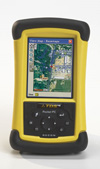
Trimble is providing a Recon rugged PDA. These PDA hand held computers are absolutely incredible! Water proof and shock proof – perfect for an ocean crossing. I will be using the PDA to run a GPS with navigation software, and to BLOG text, photos and video web updates to the web site via a satellite phone. Trimble is sponsoring the expedition with TWO PDA’s a primary and a backup.
Rugged Technologies is providing three of their top of the line water proof Cool series keyboards. The keyboard will plug directly into the USB port of the Recon.
I need your help
I think this approach to finding ways to fund an expensive project like the Atlantic crossing is really beneficial to both the sponsor and myself. I get the expensive equipment I need to complete my quest, and the sponsor benefits from valuable testimonial advertising content that is an important part of a robust marketing campaign.
I could use some help! If you have some free time and would like to become involved in the project, I could really use someone to help me find more equipment and supplies sponsors. I will provide you with a list of all the equipment and supplies that I require. You would need to phone the potential sponsor companies, speak to the marketing manager about a sponsorship in kind, and follow up with emails and various other information on the expedition that I will prepare for you.
From my brief experience, I have found that if I can connect with an actual person before sending emails, my chance of success is very high. Emails get lost and easily dismissed, whereas a phone call is taken seriously.
If you have a bit of time to spare and would like to get involved in the project, please send me an email or give me a phone call. 403-242-5482 greg@justgreg.com
I have been SLOOOWLY cleaning up the shop over the last month or so. I gutted it, cleaned everything, then slowly moved stuff back and put it all where it could be found once again. I love an organized shop. I bought some new bins at Home Depot, and a bunch of blank sticky labels. Now I have a bin for everything – bottom brackets, headsets, clamps, hinges, velcro, tape, glue, funny shaped things that look like this, etc, etc… It really helps when you are building something or prototyping. To have a part, a special fastener or a piece of tubing that’s already bent a certain way is very handy. I thing it’s really part of the creative process – to be able to envision something and then just build it using stuff you have in a bin somewhere.
And this is what a well organized, well equipped shop will get you:
This is a drive leg for the prototype boat. I built it in less than a day using parts and materials from my many little magical bins. Plus, it EVEN includes a prop which I ‘borrowed’ from my Shuttle bike human powered bike kit.
The prop bolts onto a Shimano octalink sealed bottom bracket cartridge that is screwed into a bottom bracket shell. The BB shell is welded to the end of my drive leg shaft – a 2″ x 1″ rectangular Chrome Alloy steel tube. The other end of the bottom bracket cartridge is a Shimano Dura-ace 11 tooth cog from a bike rear cassette. I welded a round plate to the back of it, drilled a hole in it and bolted it to the bottom bracket cartridge.
The chain is Shimano 9 speed Ultegra which twists up the drive shaft to a 39 tooth chain ring on a Shimano sealed bottom bracket cartridge with two brackets welded to the BB shell. 4 bolts secure the bracket to the rectangular shaft allowing the chain ring / cranks assembly to slide up or down the shaft for various lengths
A take-up pulley guides the chain down to the small cog.
I can pedal forward or backward and because my main chain ring is adjustable, I can take out all of the slack in the chain and the chain stays on the gears.
The plan is to sand down the cromaloy steel and coat it with epoxy or powder coating. For extra water proofing, I could wrap a couple layers of fiberglass/epoxy around all of the tubing which probably wouldn’t be a bad idea. The bottom brackets are sealed and should withstand prolonged periods of being submerged under water. At least, that is the experience of others who have used standard bike bottom brackets as bearings for props. Mountain bikes can take quite a bit of mud, dirt, water and torque and a decent quality bottom bracket cartridge will last for years.
The best thing about using standard bike parts is they are all easily replaceable. If the chain goes, it can be replaced with a new chain, or replacement links can be added. If a bearing fails, the entire BB cartridge can be removed with a standard BB wrench. I could carry 3 or 4 or even 10 spare replacement parts – they are all very light weight and take up very little space. This entire system could easily be overhauled – even on the water if required. Well, that’s the idea anyhow – and one of the purposes of this first drive leg.
I will need to make a fairing for it to keep the water out of the spinning chain. Ill probably wait until I know exactly how this drive holds up under some decent abuse before making a fairing.
There are a few obvious issues with this first drive leg design. Mostly, it appears to be a lot wider than I thought it would be and that will make it less efficient as it slices through the water due to the extra width of the fairing that needs to cover it all. Since I wanted to keep everything ‘standard bike stuff’, the main chain ring is offset to the right (typical bike mechanical geometry), but the prop is directly below in the center. Therefore the chain near the top is further to the right than where the chain is at the bottom where it joins the prop. I’m not sure how to re-work this, or even if it’s necessary.
The main purpose of this drive leg is to TEST it!! I Want to know for sure that the twisting chain will stand up to at least 500 hours of use in salt water. I am going to mount the drive over a large bucket filled with salt water and rig an electric motor up to the crank. I’m going to replace the chain ring / cranks shown with my SRM power meter so I can set the speed of the drill to approximate my typical power output which will be about 150 watts. In fact, I’d like to overshoot that for this test and run it 24/7 at 200 watts to see what wears out.
I am going to sand down the metal parts and paint a coat of epoxy over them to protect the steel from the corrosive effects of the salt water. My plan is to run the chain directly through the water and make sure that it is always well oiled via daily lubrication.
The drive leg that will be used on the boat will be mostly water tight and I would like to use stainless steel, so I don’t expect too much salt water to ever even touch the steel or the chain, but I want to get an idea of what the worse-case abuse would be. What if my fairing cover over the drive leg is smashed, or develops a bad leak and everything gets permanently soaked in sea water? I want to have some idea as to what would happen and how all of the parts would handle that kind of exposure.
I’m going to run some numbers through JavaProp and design my own prop. Rick Willoughby has been making his own props by bending stainless steel plate like Cory Schaffhausen’s home made prop.
Las Vegas marathon
I am recovering fast from my sub par performance at Ironman Hawaii – in fact, if it wasn’t for my bad ankle, I felt like I could have done another Ironman 4 or 5 days after finishing Kona (not that I would want to!). I think that shows you how hard I really DIDN’T go in Hawaii.
Helen and I are doing the Las Vegas Marathon on Dec 10th. I’ve been slowing getting my running back – starting with plenty of elliptical trainer, then moving some volume to the soft tread mill, and slowly doing more track running. I’m at the point now where 50% of my running is on the track and the other 50% is split between the elliptical and the tread mill. But, my ankle is healing, so I think I’ll be OK for the marathon.
My goal is to break 3:20. My best marathon time is 3:15, but all I need to re-qualify for the Boston Marathon is a 3:30. The deal Helen and I have is we will only both go to Boston if we can both qualify. She just did the Portland marathon and missed her 3:50 qualifying time by 2 minutes! I think she just might do it in Vegas, so I better do it as well.
Steve Schleicher from Nimbus Kayaks in B.C. has kindly offered to donate a slightly damaged Hyak tandem kayak that I plan on modifying to build a prototype human powered ocean boat. I plan on using this boat to gain much needed experience in ocean conditions, and to learn more about exactly what the final trans-Atlantic version of the boat should be like.
The Nimbus Hyak kayak is 19′ 3″ long, 28″ beam, 15.5″ depth and weighs 79 lbs. The plan is to cut off the Hyak top and fabricate the ocean boat canopy as illustrated in the rendering at the top. I will probably use the Styrofoam section male-plug method that I used to build both the Rocket HPV fairing and a Critical Power streamliner canopy top.
Basically, I will take the computer model of the curved canopy top, slice it up into 2″ thick sections and project and trace each section into 2″ thick Styrofoam. I glue the Styrofoam sections together and sand down the stair-step edges. Then I cover the foam plug with a combination of fiberglass, carbon, Kevlar and some type of sandwich core material like nomex to make it all stiff and strong. Then I will build the walls and floors for the compartments, install the drive leg, rudder (not shown), hatches to access the front and rear compartment, seat, etc. Then finally I will bond the one-piece top onto the Hyak hull and then cut-out the retractable canopy mid section hatch. Then I cut out the windows and fill-in with Lexan. And finally, add hardware, paint and other details.
A faired fin made from carbon or fiberglass will cover the drive leg steel tube and extend to 3 feet below the boat bottom. The prop will be only about 1 foot below the boat bottom and the bottom of the fin will hold 20 pounds of lead ballast. I calculated where the center of weight was including the 20 pounds of ballast and my own weight, and positioned the seat / drive leg unit exactly in the middle of the boat, 115.5″ from the stern. I assume that the front half and back half of the boat weight approximately the same. If my center of weight is slightly off, or if I want more weight in the stern, then I can install movable ballast weights under the floor boards in both the front and rear compartments to balance the boat as required.
Stability is maintained from both my weight being fairly low in the boat, as well as the 20 pound ballast 3 feet below the boat and some additional ballast weights under the floor boards of the bow and stern compartments. The weight of the ballast keel should allow me to stand up and lean slightly over the side of the boat without tipping over.
Capsizes are prevented by:
1. All three compartments are water tight – the front, rear AND cockpit when hatches are closed.
2. The weight of the ballast on the end of the drive leg 3 feet below the boat
3. Additional ballast below the floor boards in the front and rear compartments and possibly even the cockpit floor if required.
4. I will be strapped down to my seat with a harness so my body weight stays low in the boat.
If the boat capsizes, it should roll upright even if the cockpit hatch is open and the center cockpit compartment fills with water.
The rear and front compartments are both water-tight with accessible hatches in the bulk heads. There are two sealed compartments filled with expandable foam in the bow and stern. These should prevent sinking if the hull is damaged and all three compartments fill with water.
The rear compartment could be used to store supplies, or used as a resting or sleeping cabin. The front compartment is for storage of supplies. I’m not quite sure exactly how to gain access to the forward compartment because the drive leg is in the way. It might be possible to add hatches to the top, but I don’t like the idea of having to crawl up on the nose to get something from down in the front compartment.
I also have not yet figured out how to store and deploy the sea parachute (sea anchor). It needs to be fastened to the bow, and again, I do not like the idea of crawling across the nose to attach the sea anchor every time it is required. The sea anchor is very important because it prevents the boat from being pushed backward when travelling into strong head winds and rough seas. I could stow the anchor in the cockpit area with cables running outside the boat to the nose, but I don’t like the idea of cables running outside the boat. I really want to keep the outside shell aerodynamically clean.
The efficient aerodynamic shape of this boat is not so much for speed, but to minimize the effect of strong headwinds which are a big problem with an ocean crossing. Most human powered boats are not designed with aerodynamics in mind because of the slow average speeds of the boats which might be as high as only 10 kph. However, when pushing through a 50 kph headwind, the ‘air speed’ of the boat is 50 kph, and a smooth, aerodynamic shape will absolutely help stop the boat from being pushed backward.
I have shown the canopy hatch as hinged to the rear and to the front. I am not sure which configuration is better. If the hatch flips backward, then it allows access to the top of the bow, but won’t allow access to the top of the stern. Perhaps there is a way to fasten the canopy hatch with 4 hinged clamps (any such thing??). When all 4 clamps are closed, the hatch is secure. Buy un-clamping 3 of them, the 4th will act as a hinge allowing the canopy hatch to rotate away to the front, the back or either side. Or it could be removed completely and tied down to the rear deck. I like the hinged clamp approach, as it is the most flexible, but I am not sure if any such hinged clamp exists. When the canopy hatch is open, it is held in place with two lockable, removable struts.
The seat will rotate forward to allow access to the rear hatch. Although, I can see now that I could not access the rear compartment with the canopy hatch closed, as there would be no way of rotating the seat out of the way unless I could stand up – even then, it will be tricky. I can figure that out later after I have build the boat and can experience exactly how much room I have in there to move around, and how that seat could be moved out of the way.
Since this boat is designed to be operated with the canopy hatch closed, Adequate ventilation is very important. If ocean conditions allow, the canopy top could be opened slightly to allow some air flow into the cockpit. Aside from that, I will install a fan with fresh air intake and exit vents for the cockpit compartment (and the sleeping compartment if it is going to be used for that). The fans will be powered by lithium polymer batteries wired to solar panels on the top of the bow and stern. The small window cut into the canopy hatch is purposely small to avoid solar heating.
I’m not sure how to calculate the solar panel power production / battery storage / power consumption for the electronic equipment. I’m also not sure exactly how much electronics will be required on the test boat – although, I would like to run everything I plan on taking to the Atlantic to make sure that it all works exactly the way it’s supposed to. Maybe someone out there in AOG land can help?
Electronics for the test boat:
1. iPod, a small amp and 2 speakers 2. Ventilation fan (used often) 3. Iridium 9505A Satellite phone (Used at least once per day to transmit BLOG updates, etc) 4. Tripod Data Systems Recon PDA Tripod has agreed to sponsor the expedition by donating TWO of their very cool water proof, rugged PDAs! Watch for more news on this development in the future. It will run a GPS and navigation software (The software is being sponsored by Fugawi Marine ENC) 5. A small 12 vdc bilge pump to keep the cockpit area dry when the canopy hatch is open. This could be manually powered if need be. 6. Auto steering system. I would like to power a simple, small compass slaved auto steering mechanism
For typical day trip uses of the test boat, the Iridium sat phone and the PDA with GPS could probably be powered by replaceable AA batteries and therefore probably don’t require power from the on-board rechargable batteries and solar panels. I would think the items that need constant power would be the bilge pump, the auto steering system, the vent fan and the amp/speakers. How much power? How many batteries? How many solar panels? Can anyone offer advice with this?
If the rear compartment is to be used to sleep or rest in, then I should install 2 port holes to allow for lookouts and to let in some natural light.
The drive leg is inserted and can be pulled out of a slot cut into the hull for transportation and beaching. Since the drive leg includes a 20 pound ballast (maybe more), I am not sure how to pull it out while on the water. The ballast required to keep me stable when standing up is the same ballast that I would be pulling out of the water. I’m not sure how to deal with this. Perhaps the drive leg could be designed to rotate forward into a bay in the bow compartment. Then a paddle could be used to row ashore or to a shallow dock. A long slot cut into the hull would disrupt the smooth surface of the hull bottom though – I don’t like that. Maybe a worm gear with a hand crank to raise it up would work. Once it has been fully raised, it could be stowed in the forward compartment or laid down flat on the deck beside the cockpit seat.
“You must learn from your past mistakes, but not lean on your past successes.” Denis Waitley
Greg finishing Ironman World Championships 2006 in Kona, Hawaii
I learned a valuable lesson at the Ironman world championships in Kona, Hawaii last week. That bit of wisdom is best summed up by a quote from Thomas Carlyle: “A man without a goal is like a ship without a rudder.”
Aside from simply finishing the race, I didn’t really have a goal. As I’ve said before, the challenge for the past 4 years has been to make it to Kona – to finish in the top 5 (in my division) at any Ironman qualifying race in North America. After 7 Ironman races in 4 years, I had finally achieved that goal, and finished 4th at Ironman Arizona in April this year with a time of 10 hours, 15 minutes. I was ecstatic – I had finally done it. I figured it out. I had qualified to compete head to head with the best athletes in the world at the Infamous Ironman world championships in Kona, Hawaii. Participating in the historic, exalted event in Hawaii was to be my reward.
At the practice swim 2 days prior to Ironman. The waves were HUGE!
But as Ralph Waldo Emerson said “The reward of a thing well done is to have done it.” My reward was received way back in April when I succeeded in accomplishing my goal – the race in Hawaii itself was no reward. It was just a really long, brutally hot and painful 12 hour slug through 140.6 miles of desolate lava fields.
Why? Because I had no goal in Hawaii aside from simply finishing. And from the moment the cannon went off to signal the swim start at 7:00 am on Saturday morning in Kailua-Kona Bay, all I could think about was the finish line. That’s no way to do an Ironman.
Dr. Richter of Johns Hopkins Medical School carried out an experiment that attempted to measure the motivational effect of having a goal. The experiments involved placing rats into cylinders of water that were thirty inches deep by eight inches wide. After a short time, half of the rats were momentarily rescued by being lifted out of the cylinder for a few seconds, then put right back into the water. The other half were not. The group that was given hope swam for more than three days. The other rats drowned almost immediately.
The rats that knew there was a chance of being rescued again had a goal – to stay alive until the next rescue. The other group had no goal, so they just gave up. I think that’s kind of what happened to me in Kona on Saturday – I didn’t really have a goal, so I sort of just checked out. That’s a very painful way to race an Ironman. It makes for one VERY long, VERY difficult day!
The waves outside our hotel room were splashing up on decks two stories high
I learned about the necessity of a worthy goal. We are motivated by challenges that are only slightly out of reach. Winning Ironman Hawaii wasn’t even in the realm of possible outcomes, and placing somewhere in the middle of the pack was the best I could hope for. After all, I was racing with the best Ironman triathletes in the world. I figured that just making it to the finish line would provide me with enough incentive to enjoy the epic event, but evidently, I need more than that.
The swim start at Kona Pier
Here is how my day went:
I woke up at 4:30 am on Saturday morning which wasn’t a problem at all because Hawaii is 4 hours ahead of my mountain standard time zone here in Calgary. 4:30 am Hawaii time is 8:30 am for my internal clock. We were staying at the Sheriton Hotel which was about a 15 minute drive to Kona, so Helen drove me down to the Kailua-Kona Pier and dropped me off. I got my race number stamped onto my arms by some friendly volunteers and proceeded to the bike racks to pump up my tires. One of the big differences between Ironman in Hawaii and any other Ironman that I have done in North America is the number of volunteers. A regular Ironman race is extremely well organized with hundreds of volunteers available everywhere you turn – really, I must hand it to Ironman corporations Graham Frasier who truly produces a world class event. Ironman in Kona takes that to an even higher level. Long lines of yellow tee-shirted volunteers waiting for their chance to guide you through the transition area, help you find stuff, answer questions, etc, etc. Basically, it all makes you feel RFS (real f*ing special).
Shortly before the swim start
Having lived 45 of my 45 years north of 50 degrees latitude, I found it very strange to be walking around outside at five o’clock in the morning wearing nothing more than my tri shorts. 80 degrees is pretty comfortable. On the mainland, 5:00 am Ironman mornings are ccccccold!!! I spent the hour or so hanging out in the swim transition area chatting it up with as many others as I could find. It really helps with the pre-race nerves to strike up a conversation and make a new friend. One of those friends was Steve from Ontario who did the race last year and was a sub-average swimmer like me. He told me to stay with him and he would show me where to start and not get all tangled up with a hundred other swimmers trying to swim over and under you.
The swim start
The swim was a definite source of stress for me. I’m not the greatest swimmer and I have always really relied on some buoyancy aid from a wet suit or pull buoy in training or racing. Wetsuits are not allowed in Hawaii, so I basically had to re-learn how to swim without any buoyancy aids. I wasn’t sure how it would feel to have to swim the full 3.8 km in the ocean without the buoyancy of a wet suit – plus having to deal with the horrific pummeling typically enjoyed at an Ironman swim start.
Greg exiting the swim
Another issue was the much larger than normal surf since the earth quake which rocked Kona the week prior to Ironman. Out hotel room at the Sheriton looks out over the Pacific and the waves were crashing onto the rocks so hard they were splashing up onto hotel room balconies 2 stories higher! The hotel restaurant even had to close off a part of their deck due to dangerous surf conditions. I wasn’t too sure how or if that was going to effect my swim. In a practice swim at the Kona Peir two days before Ironman, the waves breaking just to the left of the swim area were well over 15 feet high. I had no problems with the practice swim though – big swells, and some breakers on entry and exit, but I found that I could swim absolutely comfortably in it all. Thankfully, I had no issues at all with the rough conditions.
On the bike
Luckily, the ocean conditions at 7:00 am on Ironman morning in the Kailua-Kona Bay were very calm. I followed Steve out into the water when the announcer told everyone to get in. The swim start is a deep water start which means you have to swim out to the end of the pier where the start line is, and tread water until the start cannon blows. We stood back on the beach for as long as we could before officials made us swim off to the start. Steve and I swam out to the far left side near the breaking waves and the start cannon blew just as we were nearing the start line, so that worked out well.
The swim goes into my books as one of the best Ironman swims ever. Not as far as my overall times goes, but as as to how comfortable and enjoyable it was. I don’t think I ever even touched another swimmer the entire race. In fact, soon after the start, I worked my way all the way to the right hand buoys and swam a pretty tight loop without any interference.
About 15 minutes into my swim I started to learn my second lesson of the day:
Lesson 2: HUMILITY
The understatement of the year to to say that it is humbling when a guy with one leg passes you on the swim. And then you are passed by someone tethered to a guide and you realize it’s the blind girl. Yep – I was passed by a blind girl AND a one-legged guy in the first 15 minutes of the swim. I rock.
When I reached the turn-around point – a sail boat that was 1.2 miles out into the bay, I took a quick glimpse of the time and discovered that it had taken me 40 minutes. 1:20 is about what I was expecting, so I was happy. However, there was a pretty strong current on the return leg and I ended up finishing the swim in a 1:33!! That’s VERY, very slow.
Coming out of the bike transition area
After a slow four and a half minute transition, I eagerly headed out on the bike course. My goal on the bike was to average 220 watts on the SRM meter and hopefully finish with a overall average of 195 to 200 watts. My 198 watt bike ride at Ironman Arizona got me 2nd place on the bike in just over 5 hours. I figured that the same power average on the windy and somewhat hilly Kona course should get me around 5:15 or so.
Wrong.
I rolled over the bike finish tape at a disappointing 5:36. To be positive about this, I would have to summarize the bike leg as pretty darn brutal. At first, maintaining my 220 watts wasn’t difficult, but after only 30 minutes I started having some problems. First, I was hiccuping uncontrollably and enjoying projectile vomiting about every 15 minutes or so. I threw up about 4 times in total on the bike, and I don’t really have any idea as to the cause. Perhaps i swallowed too much salt water during the swim. No sure, but I couldn’t keep down my Hammer Gel, so I started to drink the course coke and Gatorade at the half way point. My first half average watts was a decent 214, but slowed to an average of only 183 watts for the second half. I was pleasantly surprised to finish with an overall average of 198.8 watts which is a personal best for me, but really disappointed that it translated to a relatively slow average speed of only 20 mph. It wasn’t typically windy, although we did have a bit of a headwind for the route back from Hawi. I think the rolling hills probably sucked out more speed than I originally thought. Another reason could be the amount of time during my return leg that I spent out of aero position. Since the climbs in Kona aren’t super steep, I had planned on spending 99% of the time in aero position – just like other flat courses I’ve done. But i found near the end that I just was getting too fatigued to handle it, so I got up onto the hoods way more often than I planned on. I am sure this slowed me down.
The second half of the bike leg felt way too long. I thought it would never end. It was hot, I was sweating like crazy, I couldn’t hold down any nutrition and I didn’t have any energy. Just nothing at all – totally drained. This is when i realized that my goal of just finishing the race wasn’t enough motivation to keep pushing the pace. I gave in to the urge to sit up and ease off the power at every opportunity.
The heat, humidity and my sore ankle was slowing me
As I headed back out of the transition area on the run, I was thrilled to see Helen, Cody and Krista as well as my sister Theresa, Pat and their two kids Nicky and Andy. They were all wearing their Critical Power tee-shirts to support me. That was the highlight of my day.
The run was long. long, long, long – very long. Endless. I had been concerned about my ability to run at all – in fact it had been almost 3 weeks since I had run at all! I had developed this pain in my left ankle that I was afraid was a stress fracture so I had stopped all running until Ironman in the hope that I would heel in time for the big race. After 4 precautionary Advil before the start of the run, my ankle didn’t bother me at all. A bit of limping and pain to begin with, but that went away after an hour and didn’t return.
The HumblingOfGreg.com continued. In the first 15 minutes of the run I was passed by a 60 year old man. Our ages are inked on the back of our calves so you can see who you are passing, and who is passing you. In my case, it was a bunch of 50 year old women, and this 60 year old man. I just thought – wow. I am really honored to be competing with the best athletes in the world! This is really humbling. Then a 67 year old guy passed me. I rock.
It got dark later and under the new moon on the isolated and desolate queen K highway, it got very lonely. Every square mile of my body was telling me to stop and walk, but I wouldn’t give in. Not because I wanted to finish with the best time I could, but because I wanted to end the misery as quickly as possible. I knew from experience that a 15 hour day feels twice as long as a 12 hour day, and I wanted to get to that finish line as fast as possible. In my mind, I kept searching for reasons to keep on – reasons to run faster, reasons to not stop, or reasons to not walk. I decided I needed to focus on something immediate that I was looking forward to. All I could think of was sushi and my bed. Not sushi in my bed. So that’s what got me through the run – the thought of my comfy bed and all the sushi I could eat. Sushi is salty and by now I was probably becoming a bit sodium deficient. When you get that way, your body craves salty foods.
Greg crossing the finish line
After a very slow, lackluster 4 hour, 45 minute marathon, I finally made it to the finish line shoot. Music blasting, people shouting and clapping and the announcer calling out my name, I flung across the finish line and almost fainted into the arms of my catcher. I was done and I was trashed. My finish time was 12 hours, 4 minutes which places me 125th out of 167 in my 45 to 49 year old age group. That really does kind of suck – bottom 25%, but oh well. I really was honored to be competing with the best in the world. Looking at the final results, this really puts the caliber of competitors I was against into perspective:
six 60-64 year old guys beat me
one 65 year old guy and one 66 year old guy beat me
eighteen women my age finished before I did
seven 50-54 year old women beat me
four athletes competing in the handicapped division beat me
Cody, Krista, Greg and Helen at the finish line
To summarize, the Hawaii Ironman for me, was “world-class tough”. First there was the oppressive heat and humidity – it just sucks the life right out of you. All you want to do is sit in a lawn chair and drink Mai Tais. Second, I had just gotten over TWO colds in the previous month and my training took a huge hit. I was not going into this race with the kind of training volume typical of previous races. Third, I hadn’t run for almost 3 weeks prior to Hawaii due to my ankle injury. That’s not the best way to go into an A priority race. And finally, I didn’t really have a lofty goal for the day aside from just finishing, so I didn’t really go into the race with the appropriate mental arsenal required to motivate me to achieve my best.
I have always said that one of the biggest reasons I BLOG is to have some structured way to plan my life. My BLOGS are detailed transcripts of what actually happened. It is an INVALUABLE TOOL to be able to look back and learn from previous mistakes or to build on previous successes. Our memories are short and unreliable. The human brain has a tendency to build up our successes and minimize our failures. You learn more from your mistakes than your successes, so recording everything that happened – the good, the bad and the downright embarrassing is an ESSENTIAL part of any successful plan.
Now I need to consider what I learned from this experience, and sort out some goals for future Ironman endeavors. My next goal for an Ironman qualifying race is to win my age group. In Arizona, I finished at 10:15, 4th in my age group and was only a couple of seconds behind the third place finisher. My friend Myles Gaulin from Calgary finished in second place with a sub 10 hour time of around 9:52. The winner of IM AZ 06 was just in front of Myles. That means that I need to shave about 25 minutes off my time and that’s not going to be easy.
Pat and Greg enjoy sushi after the race (I was craving sushi!)
First of all, I need to start working on my swimming. My 1:14 swim time at IM AZ was 84th out of 205 in my division which is only slightly better than average at top 40%. Most of the top guys in my division are swimming close to an hour. If I can make some serious improvements in my swimming, I could potentially shave up to 10 minutes off my total time.
Second, I know I can put in a faster marathon. My run time at AZ was 3:50 which was 7 out of 205 in my division. That’s pretty good, but I know I can do better than that. I spent the first hour of the marathon limping on a sore foot from my bike shoes. If it wasn’t for that, I really think I could have done at least 3:40 – that’s another 10 minutes off my time.
And, if I qualify for Hawaii again, then my goal will be to finish above the half-way point in my division. That’s somewhere around 11 hours which I should be able to do. If I work on my swimming over the winter, perhaps I could get it down to a more reasonable 1:15 for Hawaii, a slightly better bike at 5:30 and an average 4 hour marathon would put me at 10:45 or so.
This is pretty funny. We found an old family video of when I was 200 pounds about 6 years ago, and I thought it would be fun to show it to you and compare how my body type has completely changed in the last 6 years. The scale read 148 pounds this morning which is lighter than I’ve been since high school.
Obviously, I was weight training when I was 200 pounds, but let me tell you that I was NOT healthy. I got sick all the time and every minor cold virus turned into a 5 week bronchitis ordeal. I used an asthma puffer almost every day to control my asthma which I had been suffering with since I was 5 years old. Plus, I had developed a disc bulge which caused sciatica pains in my piriformus and down my leg.
After 6 years of training for Ironman triathlons, my Asthma is completely gone. Also gone are my allergies and I get sick about once a year now and it lasts only for about a week. When I am under 160 pounds, my sciatica disappears. In my opinion based on my experience, being lean and focusing physical energy expenditure toward aerobic fitness rather than the development of copious amounts of lean body tissue is a far healthier way to live.
I know plenty of other latecomer triathletes and marathon runners who have said goodbye to life-long health issues due to a reduction in body fat and a dedication to aerobic exercise. My program is pretty simple: At least an hour of aerobic exercise per day (work your way up to 1.5 to 2 hours per day), eat as natural and healthy as you can, try to do a 3 to 5+ hour endurance activity once per week and stay away from unnecessary medical treatments and medication. It’s about as close to a fountain of youth as you can get, and it’s attainable by almost everyone.
The Hawaii Ironman is next Saturday – only 7 days away! We leave for Kona on Wednesday and I am really, really looking forward to it. My goal for the last 3 years has been to qualify for Ironman world championships in Kona and now that I have succeeded, I just want to enjoy my race in Hawaii. A personal best of 10.25 hours in the heat, humidity and winds of Kona is really unlikely, and a top finish in my division just isn’t going to happen, so I’m not going to stress about having the perfect race.
I’ve developed a bit of an ankle injury which could make a long day even longer, but that’s OK. My only goal next Saturday is to cross the finish line within the 16 hours they give you. And smile a lot.
Thinking WAY outside the box! – The human powered submarine
I’ve been getting some really great emails from you all regarding my previous semi-submersible concept, so I thought I would keep this ‘thought-experiment’ rolling, by GOING ALL THE WAY – the full-on human powered submarine.
This is a cool idea, but really way too dangerous for an ocean crossing. Too much can go wrong, and some of those go-wrongs could kill me. But, for fun and adventure, I can’t imagine a better way to travel through water! Being well below the surface of the water would completely remove any ill-effects of weather and rough ocean conditions. It’s always a beautiful day 10 feet below the ocean surface!
I wonder how tough it would be to build something like this…
Rich Easton tells me that he Mormons believe that a prehistoric East-West Atlantic crossing was made by a submarine. And some of you also pointed me to the Hunley which was a civil war human powered sub!
Human Powered Submarine (click to enlarge the images)
I started with a revolved NACA laminar flow airfoil for the main submarine body, and adjusted the seat position such that my head was just above the main sub body. The fore-aft position of the seat with the weight of the ballast keel below the prop is set to balance the vessel front-back. To minimize the volume of the air filled cockpit area, I placed a small dome over my head, which could also serve as the entry/exit conning tower.
To further minimize the air volume of the cockpit, the chamber wall dividing the stern compartment from the cockpit could take the shape of the back of the seat. Same for the front wall dividing the bow compartment.
(click to enlarge)
There would be a fresh-air intake valve at the top of the rear fin. This should be something that would allow air to flow in, and not water. The top of the rear fin should stay above the water line, but according to some reading I did on the Hunley, the crew were able to dive far below the water line for up to 2 hours after fresh air filled the cockpit from the surface. So it may be possible to dive lower than what the top of the fin would allow for.
The sub is divided into 3 air-tight compartments. A hand or leg (pedals) pump is used to pump water into the bow and stern compartments to decrease buoyancy. Another pump can be used to vent the water ballast out of the bow and stern compartments by pumping air into them from the fresh air intake on top of the rear fin.
A weighted ballast keel below the prop is used to keep the human powered sub upright.
Small wings on each side of the human powered submarine could be used to make small adjustments to it’s depth when moving forward rather than replying solely on the amount of water ballast. I didn’t draw the wings. Ah, I couldn’t resist – here is a rendering with the wings:
Actually, now that I look at it, I think it might be smarter to make the ballast keel a mono-wing. The angle of attack could rotate providing lift or negative lift.
And here are some other cool shots of the HPsub:
I don’t know much about submarines, but it would seem to me that the bow and stern compartments when filled with water would weight the SAME as the surrounding water, and therefore will do nothing to help submerge the sub. Therefore, the weight on the end of the keel below the prop has to be heavy enough to negate the buoyancy of the air-filled cockpit. I’m not sure how heavy that would need to be, or if there is some other way to decrease buoyancy aside from water and lead.
One idea is to make the sub slightly positively buoyant and diving is accomplished with wings which force the sub down under the water when moving forward. This isn’t a bad idea, as it wouldn’t require any pumps or filling compartments with air or water, etc. However, some component of power required to move the vessel forward would be diverted to keeping it under the water – a trade-off. How much I don’t know..
Pros:
1. Erase the adverse effect of waves and wind and weather slowing forward progress.
2. Stability and comfort. Under the waves and under the weather makes for SMOOTH sailing
3. Because it would be the coolest thing ever!
Cons:
1. If something sprang a leak, or malfunctioned, it could be game over batman.
2. Heat. I think it could get pretty hot in there.
3. It would be hard to build strong enough to withstand the water pressure. But then again, it’s not meant to dive any deeper than 5 to 10 feet…
I don’t know.. What do you think? Is there a way to design this thing so that if everything broke, it would not sink? That would be the key to building something safe enough to use.
I got an email the other day from Anthony Davis with an idea that I thought could have some merit. So, I decided to model it up quickly to see what it would look like.
Human Powered Semi-submersible
The idea is that the boat would be mostly submerged with the water line almost as high as the deck. The rounded top would be the only part of the boat that would be above the water line. A clear dome covers the pedalling station which would be completely water tight. Fresh air would have to be pumped into the boat from a snorkel or something.
I based the concept model from the existing model of Concept1, but I think it would be better to design a rounded hull (more submarine-like) than something that is more kayak shaped like what is shown.
Pros:
1. Drastically reduced windage. The low, aerodynamic profile is far less likely to be pushed backward while moving into a head wind.
2. Stability. This bottom heavy design would be fairly stable and almost impossible to capsize. Also breaking waves would be less likely to push the boat over, sink it or capsize it.
3. Dry. The pilot should be able to pedal during very rough ocean conditions because the sealed capsule will keep every thing dry. Breaking waves will simply wash over the curved canopy dome.
Cons:
1. Reduced windage. The aerodynamic profile would also mean that the boat is less likely to be pushed forward with following winds.
2. Heat. If the canopy top is not meant to open, it could get very hot in there.
3. Safety. If the is even the smallest leak, there would be no way to get the water out. Even if the front and rear compartments were water tight to prevent sinking, if the pedalling compartment were to fill up with water, it couldn’t be drained with scuppers because it is lower than the water line.
4. This concept is so low in the water, that there would be no way of opening the top to get fresh air, or to climb out and stand on top.
5. If the fresh air pump or vents were to malfunction, and the canopy top can’t be opened, the occupant could suffocate!
There are probably too many cons for this concept to be considered safe for an ocean crossing. I think the existing idea behind my current design – Concept1 takes the pros of this idea and eliminates the cons. It’s smooth, aerodynamic and covered for less drag through headwinds, and a dry cockpit during rough seas. Plus it’s high enough above the water line to allow the canopy top to be opened during calm conditions, or to get out onto the top.
Concept 1 with the canopy top down
Concept 1 with the canopy top open. (Boy that water line still looks pretty high. I can see that the slightest wave would easily flood the cockpit. hmmm….
This really puts my somewhat pedestrian human powered Atlantic crossing objective into perspective. If you think crossing an ocean with a row boat or pedal boat is crazy, then check out what these guys have done!
Benoit Lecomte SWAM across the Atlantic in 1998
On 16 July 1998, Texan Benoit Lecomte set out from Cape Cod to swim across the Atlantic ocean. He was accompanied by a 40 foot sailboat and swam in an electrically protected cage. He swam 6 to 8 hours a day and used the crawl stroke, switching occasionally to a mono fin and using an undulating dolphin kick to carry him over the 5600 km. 72 days later, on September 28, he swam ashore at Quiberon, France.
After a failed attempt in 2000, Peter Bray became the first man in history to kayak across the Atlantic ocean. It took him 76 days (ouch again!) And he wrote a book about his adventure:
This 45 year old veterinarian single handedly windsurfed her specially designed live-a-board wind surf board 3900 miles from Australia to Reunion Island in 60 days. And if that isn’t enough, Raphaela also windsurfed across the Atlantic ocean in 2000, the Mediterranean sea in 2002 and the Pacific ocean in 2003!!
In June of 2006, Anne Quemere became the first person to wind kite across an ocean. But before she did that, she solo rowed the Atlantic in 2003, and then the North Atlantic in 2004. Wow.
This list would be incomplete if I did not included Jason Lewis and Stevie Smith’s historic around the world by pedal power expedition. On board their pedal powered boat Moksha, Jason and Stevie pedaled across the Atlantic and Pacific oceans starting in Currently, Jason is3/4 of the way around the globe.
It took Dwight only 40 days which still stands as a solo human powered trans Atlantic record. He did it by pedaling an average of 19.5 hours per day. There is very little information available on Dwights crossing, and I am doing some research to see if I can dig up some details. I think it is very pertinent to what I am attempting to do, as it is the fastest W to E Atlantic human powered Atlantic crossing in history – even including the rowed crossings. Dwight deserves his due recognition for that accomplishment.
Kenichi Horie, a 60-year-old sailor from Osaka, Japan, pedaled Malts Mermaid from Honolulu to Kenoshi, Japan. There is very little information available on Kenichi’s crossing, but I did find some info on a solar boat Pacific crossing in 1996 that took him 138 days!
In 1998, Papa and Aurelia Neutrino sailed from Newfoundland to Ireland in 60 days aboard their raft made from junk salvaged from the streets of New York city.
Following the footsteps of Norwegian explorer Thor Heyerdahl and his Kon-Tiki expedition, the Tangaroa raft left port in Peru April 28, 2006 on its long journey across the Pacific Ocean to Tahiti. Heyerdahl crossed the worlds largest ocean on his balsa wood raft in 1947, and the Tangaroa’s crew of six men, including Heyerdahl’s grandson, explored the same route.
This isn’t human powered, but It’s kind of neat. Rob McDonald, a former Hollywood stunt man now living in the Netherlands launched his greatest project recently: a 45-foot replica Viking ship made of 15 million wooden popsicle sticks and more than a ton of glue. His route is the long way across the Atlantic – from Europe to Greenland to Northern Canada and south along the North American coast to Florida. He is scheduled to leave soon.










 Adventuresofgreg's Blog